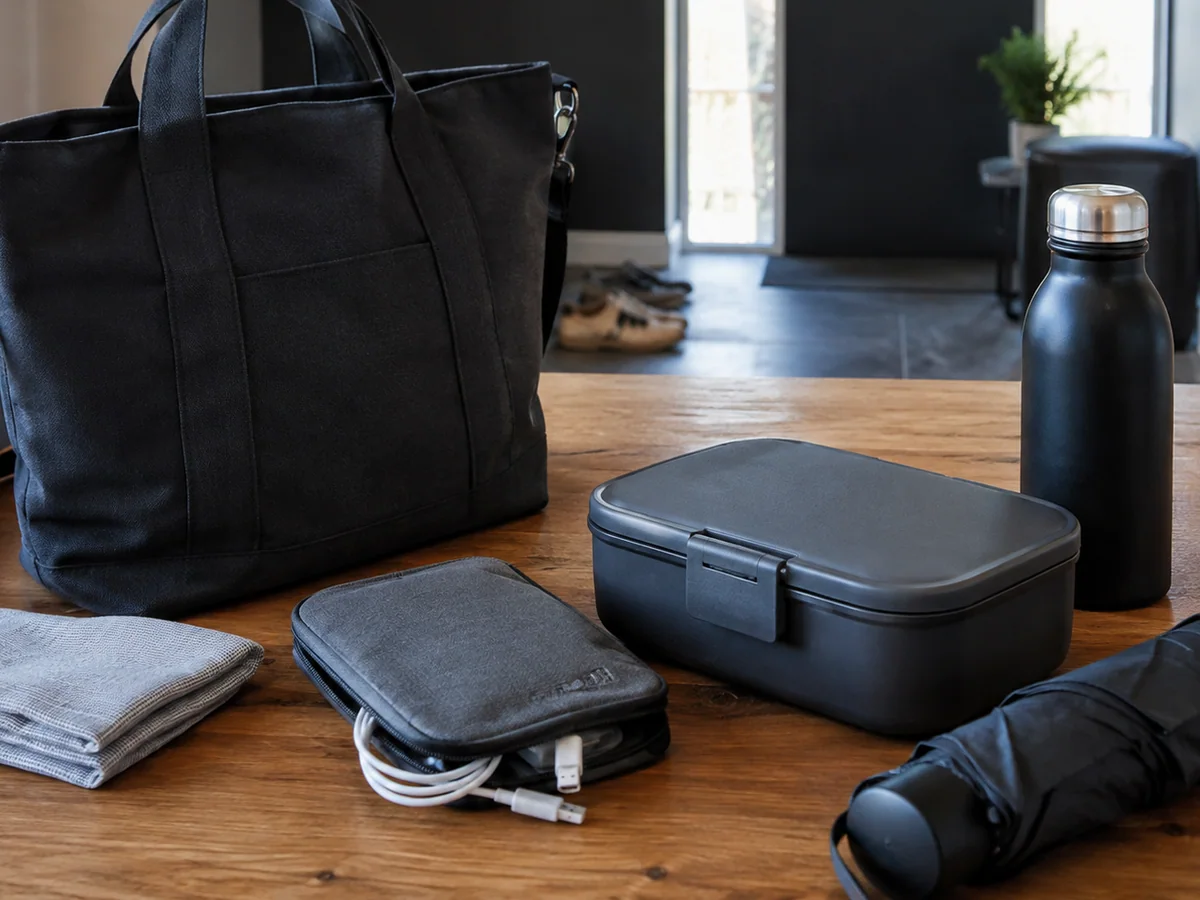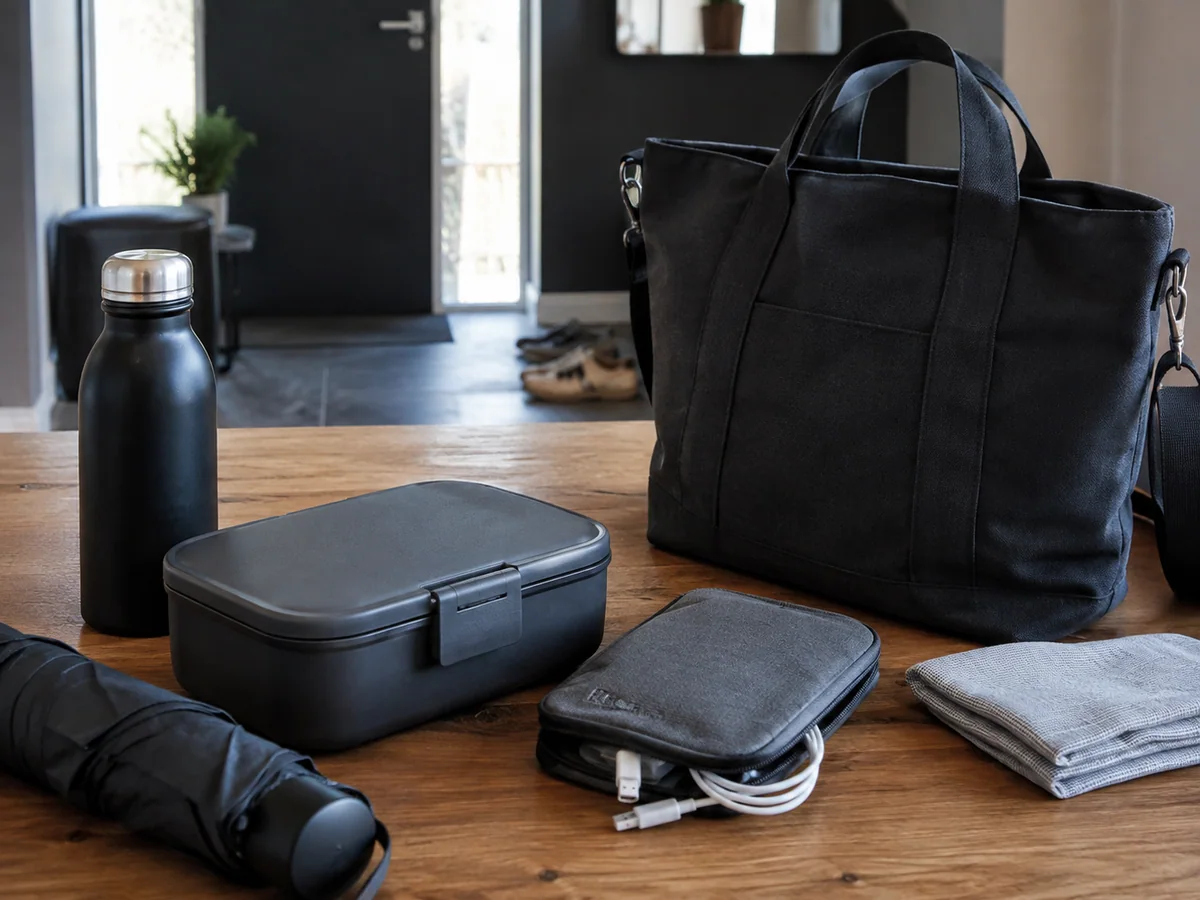
A compact pouch prevents cable tangles without becoming a museum of obsolete adapters.
The laptop is at 12 percent, and the needed cable is under three “just in case” chargers that no current device uses.
A tech pouch should reflect a device list, not anxiety about every possible socket. Lay out one normal workday and one short trip, remove duplicates that never leave the drawer, then choose a pouch whose compartments fit those objects without bending cables sharply.
Editorial field notes
A practical check before browsing
- List each device and the single charger or adapter it genuinely requires.
- Coil cables at their natural radius and measure the resulting bundle.
- Keep batteries and delicate storage devices away from crushing pressure.
- Use one bright or tactile pocket for the item needed most urgently.
Start with the real priority
Build the pouch from one normal day away from home.
Build the pouch from one normal day away from home. Treat “Separate sharp adapters from screens and earbuds” as a second filter and remove choices that cannot satisfy both conditions. Build the budget around the complete setup, including delivery, care items and any accessory required for normal use.
The ConsiderCart checklist
Three details worth comparing
- Use short cables where reach is predictable
- Separate sharp adapters from screens and earbuds
- Label unusual connectors you truly need
What not to overpay for
Good zips, useful opening angle and light padding can earn budget. Dense elastic grids and many tiny slots are not valuable when they slow packing or force connectors into tight bends.
- Carrying duplicate heavy power bricks
- Elastic loops too tight for regular use
- Leaving loose batteries where contacts can short
Ownership matters too
Audit quarterly, check cables for damage and dispose of electronics responsibly.
A useful ownership check is simple: where will this live, how will it be cleaned, and what part is most likely to wear first? Look for clear care instructions, accessible replacement parts where relevant and a return process you could actually use. Keep the packaging until the item has passed a normal-week test.
A useful tech pouch is deliberately incomplete: only the pieces that solve likely problems belong.
Before you check out
Load the pouch before discarding packaging, place it in the actual work bag and check weight distribution. Label unfamiliar adapters and review the contents every few months so obsolete cables do not become permanent passengers.
Common questions
FAQ
What should I decide before shopping for tech pouch for cables you really use?
Build the pouch from one normal day away from home.
Should I buy the premium option?
Only when the upgrade improves the feature you will use often, the warranty or repair path, or the material in a way you can verify. A higher price alone is not evidence of a better fit.
How can I reduce the chance of a return?
Measure the relevant space or fit, read the care guidance, and compare the return conditions before ordering. Use short cables where reach is predictable.