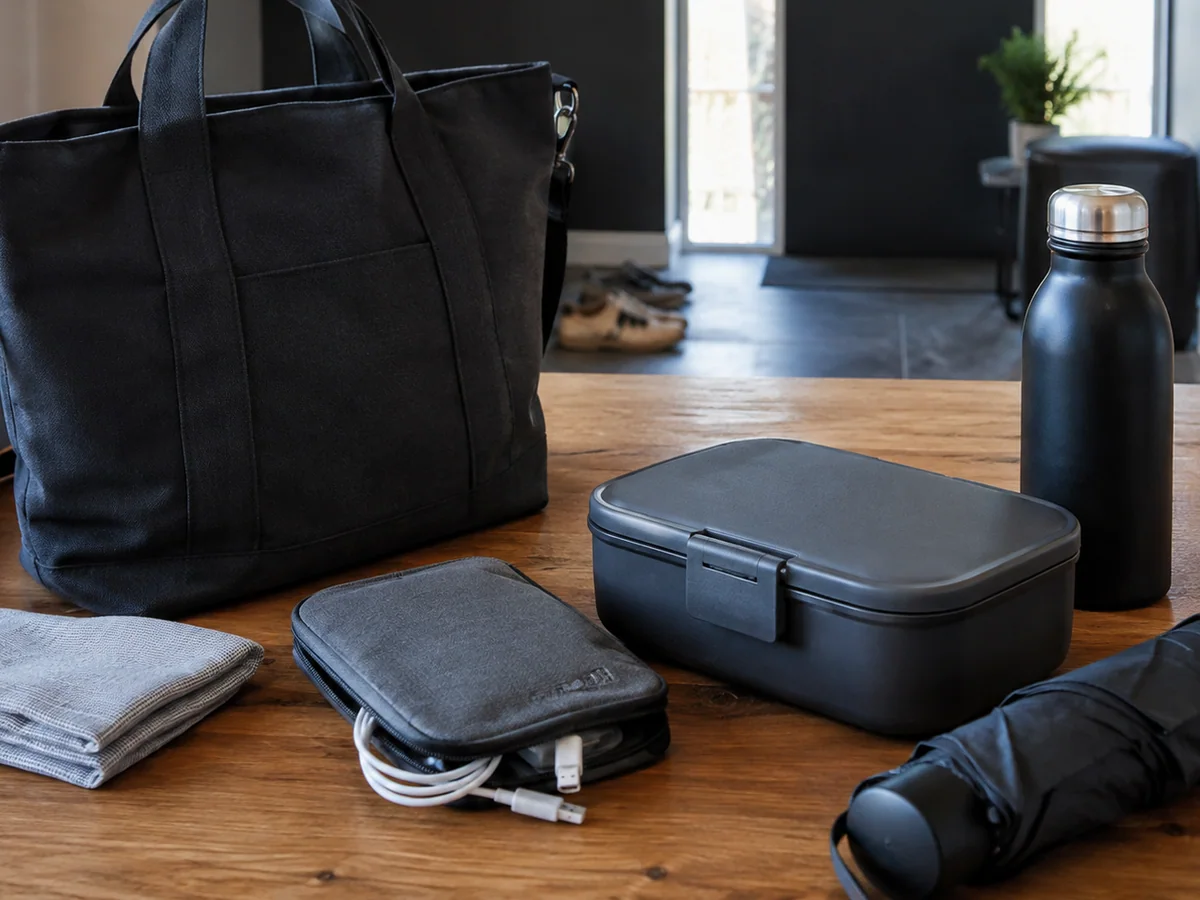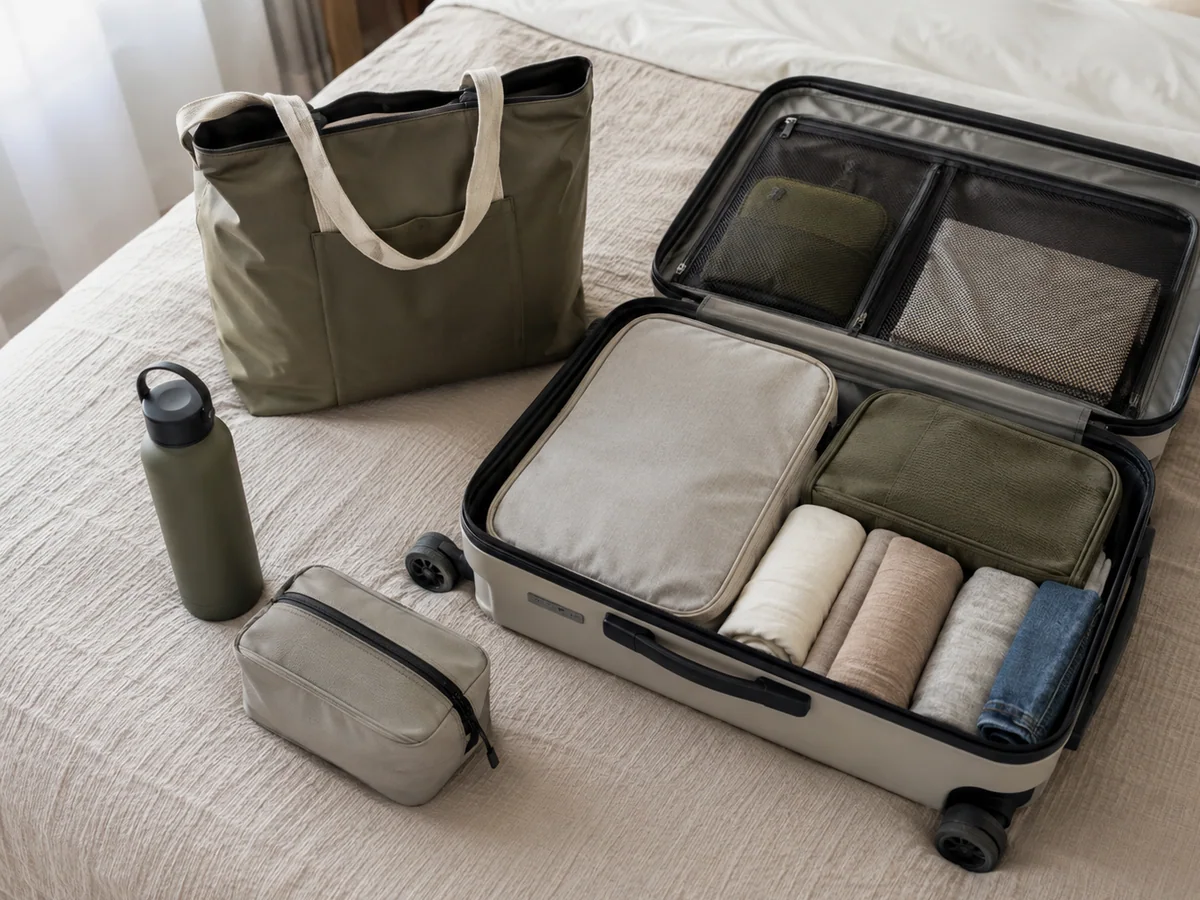
The useful travel organizer separates checkpoints, in-flight access and arrival—not every object into a pouch.
A passport, charger and liquids bag are needed at three different moments while the queue keeps moving.
The best organizer follows the sequence of the trip: documents at check-in, liquids and electronics at security, then charging and toiletries at the destination. One large pouch can look tidy while forcing every item to be unpacked at the least convenient moment.
Editorial field notes
A practical check before browsing
- Pack the exact devices, adapters and liquids used on the next trip.
- Check current airline and airport rules directly before departure.
- Place must-remove items where they can be reached without opening the main compartment.
- Leave expansion room for the return journey rather than filling every cube at home.
Start with the real priority
Pack by access sequence rather than by product category alone.
Pack by access sequence rather than by product category alone. Treat “Use a compliant transparent liquids bag where required” as a second filter and remove choices that cannot satisfy both conditions. Build the budget around the complete setup, including delivery, care items and any accessory required for normal use.
The ConsiderCart checklist
Three details worth comparing
- Keep documents and phone in one secure quick-access zone
- Use a compliant transparent liquids bag where required
- Place in-flight items where they do not require opening the full case
What not to overpay for
Clear structure, durable zips and a shape matched to the bag can merit spending. A large coordinated set is wasteful when only two sizes serve the itinerary. Organization should reduce handling, not add another layer of containers.
- Over-compressing the bag until zips strain
- Too many identical pouches
- Putting essential medication in inaccessible luggage
Ownership matters too
Empty and wipe organizers after each trip; restock only items still current and appropriate.
A useful ownership check is simple: where will this live, how will it be cleaned, and what part is most likely to wear first? Look for clear care instructions, accessible replacement parts where relevant and a return process you could actually use. Keep the packaging until the item has passed a normal-week test.
Good organization reduces opening, searching and repacking at the moments when space is tight.
Before you check out
Measure the interior of the carry-on, weigh the organizers together and confirm that filled pouches do not block the bag’s closure. Travel rules change, so treat any printed “TSA approved” language as something to verify rather than a permanent guarantee.
Common questions
FAQ
What should I decide before shopping for carry-on organizers that save time at security?
Pack by access sequence rather than by product category alone.
Should I buy the premium option?
Only when the upgrade improves the feature you will use often, the warranty or repair path, or the material in a way you can verify. A higher price alone is not evidence of a better fit.
How can I reduce the chance of a return?
Measure the relevant space or fit, read the care guidance, and compare the return conditions before ordering. Keep documents and phone in one secure quick-access zone.